

Savoring Beef Jerky Meat Sticks: A Guide for Snack Lovers
The satisfying snap, the savory flavor, the protein-packed convenience—there's something undeniably appealing about a high-quality beef jerky meat stick. For decades, these portable powerhouses have been a staple for hikers, road-trippers, athletes, and anyone needing a quick, delicious source of energy. They represent a perfect marriage of tradition and modern convenience, evolving from a simple preservation method into a gourmet snack with a dizzying array of flavors and styles.
But what exactly separates a truly great beef stick from the rest? This guide will dive deep into the world of beef jerky sticks. We will explore their rich history, uncover the meticulous process behind crafting the perfect meat stick, and highlight the nutritional benefits that make them a smart snacking choice. We'll also break down what to look for on a label to ensure you're getting a quality product and even explore the endless flavor possibilities that await.
From Ancient Preservation to Modern Snack Staple
The concept of dried, preserved meat is as old as civilization itself. Long before refrigeration, cultures around the world developed methods to cure meat to prevent spoilage and create a lightweight, nutrient-dense food source for long journeys, harsh winters, or times of scarcity. The term "jerky" is believed to have originated from the Quechua word "ch'arki," meaning "to burn meat," a method used by the Incas in South America.
The meat stick is a more modern evolution of this ancient practice. While traditional jerky consists of whole muscle strips that are marinated and dried, the beef stick is typically made from ground or finely chopped meat. This meat is mixed with spices and curing agents, then extruded into its characteristic cylindrical shape and slow-cooked or smoked to perfection.
This innovation made the snack even more convenient and consistent. The ground texture allows for a more uniform distribution of spices, ensuring every bite is packed with flavor. It also creates a softer, easier-to-chew product compared to the often-tough texture of whole-muscle jerky. This accessibility helped propel meat sticks from a niche item for outdoorsmen into a mainstream snack found everywhere from gas stations to gourmet food shops.
The Art and Science of Crafting the Perfect Beef Stick
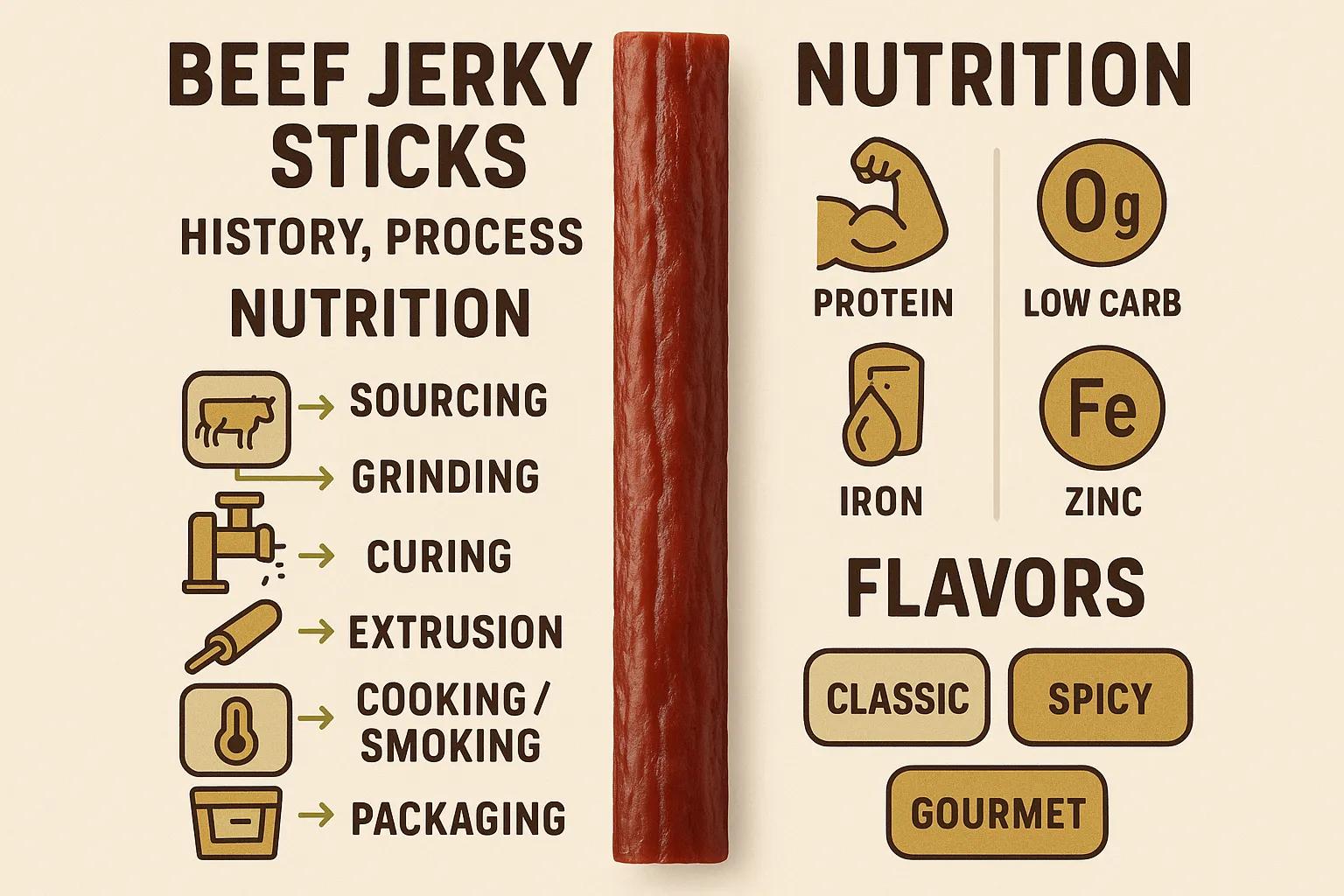
Understanding these steps is vital for anyone interested in the craft of beef jerky sticks. Each phase plays a crucial role in ensuring the final product is not only delicious but also safe and nutritious, making it a popular choice among snack enthusiasts.
Creating a high-quality beef jerky meat stick is a process that balances culinary art with food science. It's a multi-step journey that requires precision, patience, and a deep understanding of how ingredients interact. While recipes vary, the fundamental process remains consistent.
This table outlines the essential steps involved in creating high-quality beef jerky, highlighting the key processes and their significance in ensuring a delicious, safe product.
|
Process Step |
Key Considerations |
|
|---|---|---|
|
Sourcing Quality Meat |
Choose lean cuts of 100% beef for optimal flavor and texture. |
The quality of meat impacts taste and safety. |
|
Grinding and Mixing |
Finely grind the meat and blend it with spices for uniformity. |
Consistency of grind affects final texture. |
|
Curing for Safety and Flavor |
Introducing curing agents to prevent bacteria and enhance flavor. |
Natural alternatives, such as celery powder, are preferred. |
|
Extrusion and Shaping |
Shaping the meat mixture into sticks using casings. |
Avoiding air pockets is crucial for texture. |
|
Cooking and Smoking |
Slow-cooking at low temperatures to dehydrate and infuse flavor. |
Natural hardwoods enhance aroma and taste. |
|
Cooling and Packaging |
Rapid cooling and vacuum-sealing to maintain freshness. |
Proper packaging prevents spoilage |
Unpacking the Nutritional Punch of a Beef Jerky Stick

One of the primary reasons beef jerky sticks have remained so popular is their impressive nutritional profile. They are a convenient and effective way to fuel your body, especially when you're on the go.
The most significant benefit is their high protein content. Protein is essential for building and repairing tissues, supporting muscle growth, and maintaining a healthy immune system. A single beef stick can provide a substantial serving of protein, making it an excellent post-workout snack or a tool to curb hunger between meals. Protein is more satiating than carbohydrates or fats, meaning a meat stick can help you feel fuller for longer, which can aid in weight management.
Beef sticks are also naturally low in carbohydrates. This makes them a fantastic snack option for individuals following low-carb or ketogenic diets. Unlike sugary granola bars or carb-heavy snacks that can cause a spike and crash in blood sugar levels, a beef stick provides a steady release of energy.
Furthermore, beef is a rich source of essential vitamins and minerals. It is particularly high in iron, which is crucial for transporting oxygen in the blood and preventing fatigue. Beef also provides significant amounts of zinc, which supports immune function and metabolism, and B vitamins, especially B12, which is vital for nerve function and the formation of red blood cells.
How to Read the Label: Choosing a Quality Meat Stick
The snack aisle is filled with countless meat stick brands, and not all are created equal. Learning to read nutrition labels and ingredient lists is the key to separating premium products from highly processed ones.
Check the Ingredient List: The shorter, the better. The first ingredient should always be beef. Look for phrases like "100% beef" to ensure you're not getting a product filled with other meats like pork or chicken, unless it's a blended stick. Be wary of long lists of chemical-sounding ingredients, artificial flavors, or fillers like soy or corn syrup.
Look for "No Added Nitrates or Nitrites": While curing is essential, many health-conscious consumers prefer to avoid synthetic nitrites. Look for products that state "No Nitrates or Nitrites Added, except for those naturally occurring in sea salt or celery powder." This indicates the producer is using a more natural curing process.
Sugar Content: Some manufacturers add a surprising amount of sugar or high-fructose corn syrup to their meat sticks to enhance flavor and mask lower-quality ingredients. Check the sugar content on the nutrition panel. A high-quality, savory beef stick should have very little to no added sugar.
Sodium Levels: Meat sticks are a cured product, so they will naturally contain sodium. However, some brands have excessively high levels. If you are monitoring your sodium intake, compare different brands to find one with a more moderate amount.
Protein Content: The main reason you’re reaching for a beef stick is likely for the protein. Compare the protein-to-calorie ratio. A good beef stick will offer a high amount of protein for a relatively low number of calories.
An Explosion of Flavors: From Classic to Creative
While the classic, smoky beef stick will always have its place, the modern market has seen a creative explosion in flavor profiles. This variety ensures there is a meat stick to satisfy every palate.
Classic Flavors: These are the timeless recipes that have been loved for generations. Original, Black Pepper, and Teriyaki are the cornerstones of the meat stick world. These flavors highlight the natural taste of the beef, enhanced with simple, savory spices or a touch of sweetness.
Spicy and Hot Varieties: For those who like a kick, the options are endless. Jalapeño is a popular choice, offering a moderate heat and a fresh, vegetal flavor. For the more adventurous, there are sticks infused with the intense heat of habanero, ghost pepper, or even the Carolina Reaper. These spicy beef sticks provide an extra jolt of energy and a lingering warmth.
Gourmet and Artisanal Flavors: As the craft food movement has grown, so has the creativity in meat stick flavors. You can now find gourmet options that sound like they belong on a restaurant menu. Flavors like Chili Cheese, BBQ, Sweet & Spicy, and even blends with different cheeses or herbs are becoming more common. These artisanal beef sticks use high-quality, unique ingredients to deliver a more complex, refined snacking experience.
The Versatility of the Humble Beef Stick
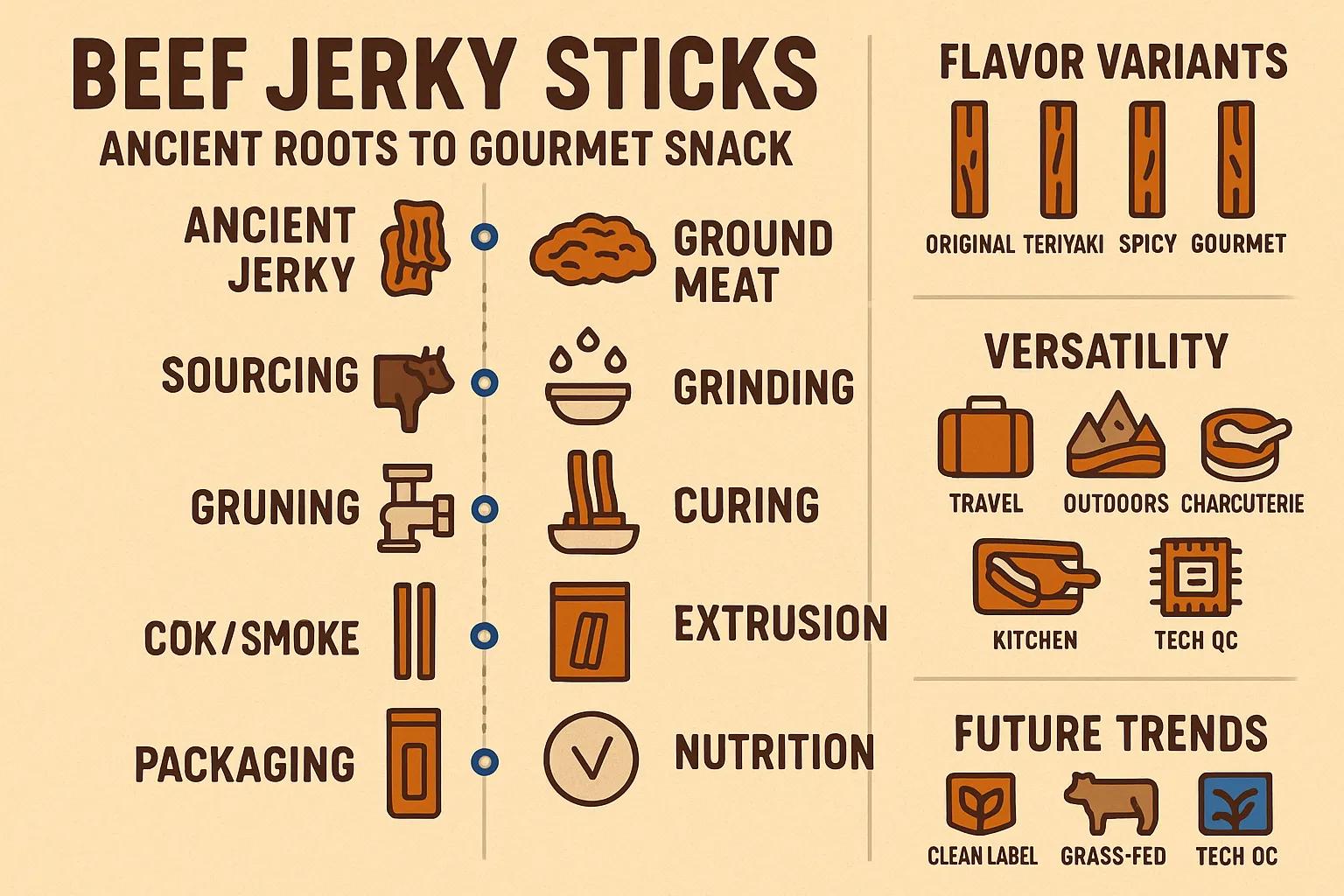
The beef jerky meat stick is far more than just a quick snack to eat out of the wrapper. Its convenience and savory flavor make it a surprisingly versatile ingredient that can be incorporated into a wide range of meals and situations.
The Ultimate Travel Companion: For road trips, flights, or long commutes, a beef stick is an ideal travel snack. It's mess-free, doesn't require refrigeration, and provides the sustained energy needed to stay alert and focused.
Fuel for Outdoor Adventures: Hikers, campers, and fishermen have long known the value of a meat stick. It's lightweight, durable, and packed with the protein and calories needed to power through strenuous physical activity. It’s the perfect addition to any backpack or tackle box.
A Charcuterie Board Surprise: Elevate your next cheese or charcuterie board by adding sliced beef sticks. Their savory, smoky flavor pairs wonderfully with a variety of cheeses, from sharp cheddar to creamy brie. Cut them on a bias to create an appealing shape and add a unique, rustic element to your spread.
In the Kitchen: Get creative by chopping a beef jerky stick and using it as a flavor-packed ingredient. Toss it into scrambled eggs or an omelet for a protein boost, sprinkle it over a salad as a crunchy and savory topping, or stir it into mac and cheese for a smoky twist.
The Future of Meat Snacks
The world of meat snacks is constantly evolving, driven by consumer demand for healthier, more transparent, and more exciting products. The beef jerky stick is at the forefront of this evolution. We are seeing a continued rise in "clean label" products that are free from artificial ingredients, gluten, and MSG. The use of grass-fed beef is also becoming more prevalent as consumers seek out products that are not only better for them but also better for the environment.
Flavor innovation will continue to push boundaries, with producers experimenting with global cuisines and unique ingredient combinations. The integration of technology in production will also lead to even greater consistency and quality control. The humble beef stick has come a long way from its origins as a simple preserved food, and its future as a premium, gourmet snack is brighter than ever.
Conclusion: More Than Just a Snack
The beef jerky meat stick is a testament to the power of simple, high-quality ingredients and time-honored techniques. It’s a snack that connects our modern, fast-paced lives to an ancient tradition of food preservation. From its meticulous creation process to its impressive nutritional benefits and incredible versatility, the beef stick has earned its status as a beloved staple. Whether you need a quick protein fix, a reliable source of energy for your next adventure, or simply a delicious and satisfying treat, the beef jerky meat stick delivers. By choosing a quality product made with care, you’re not just eating a snack—you’re enjoying a piece of culinary history.
Are you ready to experience what a truly premium beef stick tastes like? At Matt-Hat Jerky, we're passionate about crafting the best jerky and meat sticks you've ever had. We start with 100% American beef and use our family’s time-tested recipes to create snacks that are bursting with flavor. Our sticks are slow-smoked for authentic taste and are free of artificial ingredients. From classic flavors to bold new creations, we have a stick for every snacker. Don't settle for average. Fuel your day the right way and taste the Matt Hat Jerky difference. Visit us to explore our collection!
Frequently Asked Questions (FAQs)
1. Do beef jerky sticks need to be refrigerated?
Unopened, most commercially packaged beef jerky sticks are shelf-stable and do not require refrigeration. This is due to the curing and dehydration process, which removes moisture and prevents bacterial growth. However, once opened, it is best to consume the stick promptly or refrigerate any leftovers to maintain freshness.
2. Are beef jerky sticks healthy?
High-quality beef jerky sticks can be a very healthy snack. They are an excellent source of protein, typically low in carbohydrates, and provide essential minerals such as iron and zinc. The key is to choose brands that use 100% beef, avoid excessive sugar and artificial ingredients, and use natural curing methods.
3. What is the difference between a beef stick and a Slim Jim?
While both are meat snacks, there are often significant differences in quality. A premium beef stick is typically made with 100% beef and a simple list of natural spices. Products like Slim Jims are often made with a mixture of meats (beef, pork, chicken), and their ingredient lists can include more fillers, artificial flavors, and preservatives.
4. How long do beef jerky sticks last?
Unopened and properly stored in a cool, dry place, a beef jerky meat stick can have a shelf life of up to a year. The "best by" date on the package is the most reliable guide. The vacuum-sealed packaging is crucial for preventing spoilage.
5. Can I make beef jerky sticks at home?
Yes, it is possible to make beef sticks at home if you have the right equipment, such as a meat grinder, a jerky gun or sausage stuffer, and a dehydrator or smoker. It's crucial to follow a reliable recipe and properly use curing salts to ensure the final product is safe to eat. The process requires precision and patience, but can be a rewarding culinary project.
